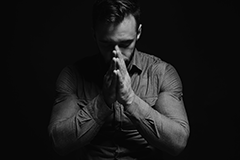

How Do I Fast as a Christian?
Jesus said when you fast, not if. Here is what fasting is for, how to begin, and who should choose a different kind of fast.
Fasting has become fashionable again, which is a strange thing to say about one of the oldest practices in Scripture. Intermittent fasting, dopamine fasting, digital fasting. Everyone is giving something up for a while and calling it a fast.
Christian fasting is older than all of that and aimed at something different. It is not a health strategy or a productivity hack, though people sometimes come to it that way. It is going without something you need in order to sharpen your hunger for someone you need more. And Jesus assumed His followers would do it.
What is Christian fasting?
Voluntarily going without food, for a set time, for the purpose of seeking God.
Each part of that matters. Voluntarily, because it is not a punishment or a penance. For a set time, because it has an end, and the end is part of the design. And for the purpose of seeking God, because that purpose is what separates it from a diet. Take away the God part and you are simply hungry.
The Bible describes people fasting in grief, in repentance, in desperate need of guidance, in preparation for something hard, and in plain longing for God. What ties those together is that in every case the person is saying, with their body and not just their words, that God matters more to them than the most basic comfort they have.
Does the Bible tell Christians to fast?
Jesus does, in the way He phrases it. In the Sermon on the Mount He says, "And when you fast, do not look gloomy like the hypocrites" (Matthew 6:16 ESV). When, not if. He treats it the way He treats prayer and giving in the same passage, as an assumed part of following Him.
When His critics asked why His disciples did not fast, He did not say they never would. He said they would not while the bridegroom was with them, and then "the days will come when the bridegroom is taken away from them, and then they will fast" (Mark 2:20 ESV). Those days are now. The early church fasted before sending out missionaries, before appointing leaders, and as ordinary practice.
So fasting is not a command in the way baptism is, but it is an expectation, and a Christian who never fasts is missing something Jesus assumed they would have.
Why fast at all?
Because you find out very quickly what you have been running on.
Skip a meal on purpose and by mid afternoon your body starts complaining, and then something interesting happens. Every hunger pang becomes a small reminder to turn toward God. The physical emptiness makes the spiritual hunger harder to ignore. Jesus, hungry in the wilderness after forty days, quoted the verse that explains the whole practice: "Man shall not live by bread alone, but by every word that comes from the mouth of God" (Matthew 4:4 ESV).
Fasting also exposes you. Within hours you will meet your own irritability, your dependence on comfort, the way you reach for food when you are anxious or bored rather than hungry. That is not pleasant and it is deeply useful. You cannot bring to God what you do not know is there.
And it clarifies. Many Christians fast when they need to make a decision, not because fasting produces an answer, but because it quiets the competing noise long enough to hear. How Do I Hear God's Voice? goes into what listening actually looks like.
How do I fast for the first time?
Start small, and start with a purpose.
Skip one meal. Lunch is easiest for most people. Use the time you would have spent eating to pray and read Scripture instead, since the substitution is the whole idea. Drink water. Do it once a week for a month before attempting anything longer.
Decide in advance what you are fasting toward. Not what you are giving up, but what you are seeking: guidance about something specific, a person you are burdened for, repentance, or simply more of God. Write it down. Every time you feel hungry, return to it.
Once a single meal is manageable, try sunrise to sunset, then a full twenty four hours. Longer fasts exist and have a long history, but they are for people with experience and medical clearance, and there is no prize for going longer than is wise.
If food is not possible for you, and for some people it is not, fast from something else you genuinely depend on. Screens are the most common modern substitute, and for many of us they are a more honest fast than food. The principle is the same: remove a comfort, feel its absence, turn the feeling toward God.
Who should not fast from food?
This needs to be said plainly, because fasting can be harmful for some people and no spiritual benefit outweighs that.
If you are pregnant or nursing, diabetic, on medication that requires food, recovering from illness, or under a doctor's care for any condition affected by eating, talk to your doctor first and fast from something other than food if they say no.
And if you have any history with disordered eating, please do not fast from food at all. The line between a fast and a relapse is not one you should ask yourself to walk. Fast from something else. God is not more honored by your hunger than by your health, and a practice that reopens a wound He has been healing is not from Him.
What should I do while fasting?
Pray, especially at the moments you would have eaten. That rhythm is built in and it is a gift.
Read Scripture, ideally more than usual. The hours you reclaim are meant to be filled, and an empty stomach with an empty schedule quickly becomes just a bad day.
Keep it quiet. Jesus was specific that fasting is not to be advertised. Wash your face, look normal, tell only the people who need to know. The reward is from the Father who sees in secret.
Be gentler with yourself than usual, because you will be more irritable than usual, and treat that as information rather than failure.
And end it well. Break the fast with a simple meal and a prayer of thanks. Some of the women in our community mark the end by writing what they sensed during the fast in the journal from that month's Womens Box, though any notebook works, and the recording matters more than where it goes.
The hunger is the point
Nothing about fasting makes God love you more. That was settled at the cross and it does not move. What fasting does is make you more aware of the love that was already there, by clearing away the smaller comforts you had been using to avoid noticing your need for it.
David wrote from the wilderness, "My soul thirsts for you; my flesh faints for you, as in a dry and weary land where there is no water" (Psalm 63:1 ESV). He was not describing a technique. He was describing a hunger he had stopped covering up.
That hunger is already in you. Fasting just turns down the noise until you can hear it. Skip lunch tomorrow, sit with the emptiness, and see what it has been trying to say.
With love,
Elise
A few questions people ask
What is the purpose of fasting in Christianity?
To seek God by voluntarily going without food for a set time. Fasting sharpens spiritual hunger, exposes what you have been depending on, and clears space for prayer and listening. It does not earn God's favor; it makes you more aware of it.
How do I start fasting as a beginner?
Skip one meal, usually lunch, and use that time for prayer and Scripture. Drink water. Decide in advance what you are seeking. Do this weekly for a month before trying a sunrise to sunset fast or a full day.
Who should not fast from food?
Anyone pregnant or nursing, diabetic, on medication requiring food, recovering from illness, or with any history of disordered eating. Fast from something else instead, such as screens. Health is never worth trading for a spiritual practice.
Can I fast from something other than food?
Yes. Fasting from screens, social media, entertainment, or another real dependence follows the same principle: remove a comfort, feel its absence, and turn the feeling toward God. For many people today this is the more honest fast.